
Debt Ratio: Understanding and Evaluating Financial Health

In this section, we will explore practical tips for managing debt effectively. Companies with high D/E ratios tend to have higher interest expenses, which can increase the overall cost of capital. This can make it more expensive for them to raise additional funds through debt or equity. In contrast, companies with lower D/E ratios may have a lower cost of capital, potentially making it easier and less expensive to raise capital.
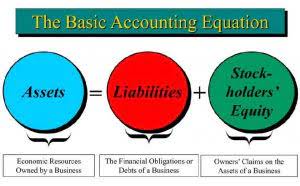
Is a 30% debt to asset ratio good?
By contrast, a current ratio of less than 1 may indicate that your business has liquidity problems and may not be financially stable. Defining a High Debt-to-Equity Ratio For example, if your small business has $400,000 in total liabilities and $250,000 in total stockholders' equity, your debt-to-equity ratio is 1.6. This means you use $1.60 in debt for every $1 of equity, or your debt level is 160 percent of your equity. This suggests that an estimated 31% of Bajaj Auto’s assets are financed through debt. The company’s total assets consist of cash, accounts receivable, inventory, property, plant, and equipment.
Start free ReadyRatios financial analysis now!
You are solely responsible for deciding whether to invest in the GenA portfolio you have constructed through the tool. Before investing, please carefully consider whether it is suitable for you based on your investment objectives, risk tolerance, and other individual factors. By monitoring these ratios and understanding the context behind the numbers, stakeholders can make informed decisions and take proactive steps to ensure the company remains on solid financial ground. It's a delicate balance, but with vigilant oversight, companies can use debt to their advantage without falling into the pitfalls of over-leverage. Remember, the key is not just the ratios themselves, but the story they tell about the company's financial trajectory. Managing debt effectively requires discipline, a debt ratio of 0.5 indicates: planning, and a willingness to make changes to your spending habits.
What is the Debt Ratio? A Comprehensive Guide to Understanding, Calculating, and Utilizing Debt Ratios

This means that when using the debt ratio, in order to get an accurate debt ratio analysis, financial managers and business managers have to make use of good judgment and look beyond the numbers. Another issue with the debt ratio is the fact that in an industry, different businesses use different accounting practices. Therefore, any comparison will be invalid if some of the companies use one depreciation method or one inventory accounting method and other companies use other methods.
- The main limitation of the debt-to-asset ratio is that it does not account for the company’s ability to pay off its debt.
- This ratio measures the amount of long-term debt you have in relation to your assets.
- By analyzing a company's debt-to-equity ratio, debt-to-asset ratio, and other key financial ratios, businesses can make informed decisions about their financing options.
- It means more of the company’s assets are financed through its own money (equity), not debt.
- Increasing your income can be achieved by working overtime, getting a second job, or starting a side business.
Debt ratios are important financial metrics that help individuals and businesses understand their financial standing and manage their debts effectively. There are various types of debt ratios that are used to analyze different aspects of debt, including liquidity, solvency, and leverage. In this section, we will provide a comprehensive overview of the different types of debt ratios and https://www.pakgoldenline.com/2025/04/10/revolutionizing-financial-transparency-the-future/ their significance. In the real world, companies use debt ratios to assess their financial health and make informed decisions. A debt ratio of 1.0x, like Company A's, indicates a company's debt is equal to its assets, which is a neutral position.
Interest Coverage Ratio

One of the key factors that affects the financial performance and growth potential of a small business is its debt ratio. The debt ratio is the proportion of a company's total liabilities to its total assets. It measures how much of the company's assets are financed by debt, and how much leverage the company has. A high debt ratio indicates that the company has a large amount of debt relative to its assets, which may pose a risk of default or bankruptcy. A low debt ratio indicates that the company has a small amount of debt relative to its assets, which may imply a conservative financial strategy or a lack of access to credit. The debt-to-asset ratio measures the degree to which a company’s assets are financed through debt versus equity.

Debt ratio formula
- Regularly monitoring the debt ratio helps institutions identify excessive leverage that may pose financial risks.
- From the perspective of a CFO, leverage is a tool to be wielded with precision.
- As such, it's crucial to ensure the accuracy and completeness of financial data before feeding it into these algorithms.
- Debt Ratio is the indicator of how much outstanding debt a company is having as compared to its assets.
- While a certain level of debt can be a strategic tool for growth, excessive or mismanaged debt can lead to financial distress or even insolvency.
- Debt-to-asset ratios above 50% are twice as likely to face financial distress compared to those with lower ratios, according to a study by the Harvard Business School.
Industry benchmarks play a crucial role in interpreting the debt to asset ratio. For instance, pipeline companies often have a higher debt to asset ratio than technology companies due to their more stable cash flows. A moderate debt ratio can indicate a balanced approach to leverage, but different industries have varying benchmarks for what constitutes a healthy debt ratio. This means that a company's debt ratio should be payroll evaluated in the context of its industry. Total debt includes all types of debt, such as loans, credit cards, and mortgages, which are categorized as liabilities on the company's balance sheet.
As you can see, each company has a different debt-to-asset ratio, which affects their overall financial risk. A debt to asset ratio approaching 1 (or 100%) is unsustainable over long periods of time, as it would likely lead to solvency issues and risk triggering an event of default. Margin investing involves significant risk, including losses greater than your initial investment. You must repay margin debt regardless of the value of securities purchased. Review Public’sMargin Disclosure Statement, Margin Agreement, and Fee Schedule.
- A debt ratio exceeding 0.5, meaning that debt comprises more than half of the total assets, can be a warning sign.
- Both the numerator and denominator in this calculation are always positive numbers, so the resulting ratio cannot be negative.
- When evaluating debt ratio values, consider the context and industry standards.
- In fact, the debt to asset ratio formula only considers tangible assets, which might lead to an incomplete picture of a company's financial situation.
- There is no absolute number–or even firm guidelines–for a ‘safe’ maximum debt ratio.
- Think about how these ratios compare to other financial ratios, and we'll get into that in the next section.
- Examples of total debt are wages, credit card debt, utilities, or invoices to be paid.
Step 1: Apply the Debt to Asset Ratio Formula
Apple's debt-to-equity ratio determines the amount of ownership in a corporation versus the amount of money owed to creditors, Apple's debt-to-equity ratio jumped from 50% in 2016 to 112% as of 2019. A company is said to be overleveraged when it has too much debt, impeding its ability to make principal and interest payments and to cover operating expenses. Being overleveraged typically leads to a downward financial spiral resulting in the need to borrow more. To calculate the debt to asset ratio for the given company, Reliance Industries Ltd. You will be able to find the debt to asset ratio of a stock under ‘balance sheet’ in the ‘fundamentals’ tab of Strike.
The formula for calculating debt-to-equity ratio:
The debt ratio is an important metric because it can give insight into the financial health of a company or individual. One of the most common ways to evaluate a company's debt situation is by calculating its debt ratio, which is the proportion of a company's total liabilities to its total assets. When considering a company's debt to asset ratio, it is also essential to look at their overall financial position, including factors like child support and other monthly payments. In conclusion, the figures are just guides—the appropriate debt ratio can vary significantly across industries and companies. The debt ratio holds a vital place in financial analysis as it can depict the financial stability of a company.